One of my favorite movies is ‘Apocalypse Now’ Francis Coppola’s dark Vietnam war story, of one man’s mission to travel upstream into the heart of the Vietnam war to assassinate a renegade officer. The river if it could exist could be the Mekong which runs from the Delta in Vietnam, north through Cambodia and into Laos. The river runs through Vietnam past the relative prosperity of Phnom Penh and then further north into the remoter reaches of Cambodia. Like the film, as you go upstream you leave civilization further and further behind.
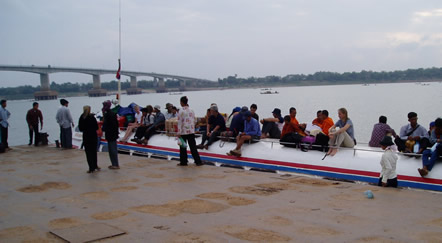
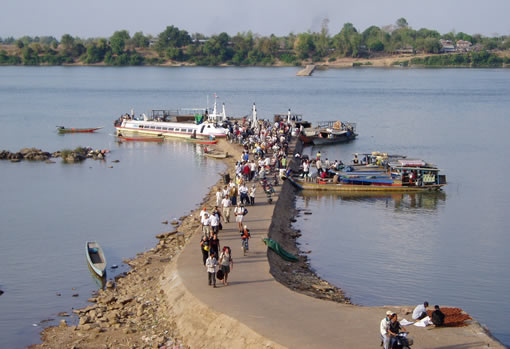
The express boat starts in Kompong Cham, two hours drive North of Phnom Penh under the only bridge over the Mekong in Cambodia. The river is too shallow in the dry season for the boat to go the whole way. This journey is not quite the Apocalypse Now. Down below in the air-conditioning there are 20 odd Cambodians watching Khmer karaoke videos. Up above on the roof there are a dozen Europeans who have decided that the better view and less Karaoke compensates for the discomfort. We choose the roof. 5 minutes out of town and that bridge is the last modern construction for the next 4 hours as the boat skims up river to Kratie. This area is quite densely populated. There are fishermen on the river and wooden houses on the banks. Every now and again we come across small towns of wooden shacks, where the boat docks briefly, no more than a touch and go, and we are back on up stream.
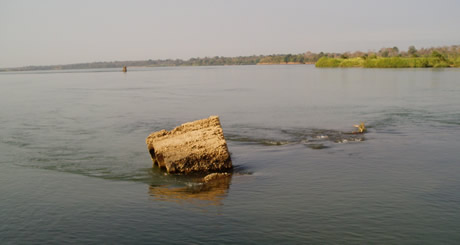
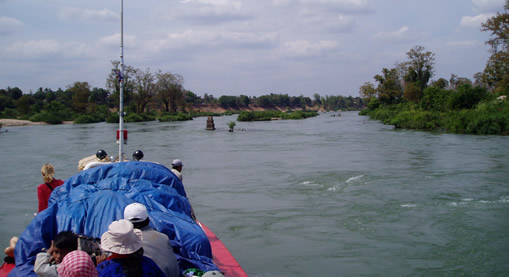
The small town of Kratie is the beginning of the back of beyond. The road north from here is so poor that my drivers, keen as they are for work and overtime, suggested it was better to get the boat. Another 10 kms upstream start the rapids. The French, back in the 1950s, laid out the navigation channel with large concrete pillars marking out the passage. The route switches back and forth across the river, sometimes direct across the shallows, other times doubling back on itself to reach another channel on the other side of the river seeking the few feet of water the Express needs. The pillars don’t look like they have been repaired since the French left. Many lie fallen half submerged in the water. There is a story that an aid donor offered to fix them up. The Cambodians demanded flashing lights, the donor declined and there they still stand, crumbling away.
And now it starts to feel remote with only the occasional fisherman. Every now and again a small boat darts out from the bank to meet the Express with a few passengers. Here in the north there are few people and fewer roads. So few people that the Americans considered it empty in the Vietnam war apart from the North Vietnamese trekking down the Ho Chi Minh Trail and allowed the B52s free reign to drop any spare bombs over the area. The few inhabitants became fewer, the elephants and the tigers were wiped out. It was the first area to be lost to the Khmer Rouge as Cambodia fell apart.
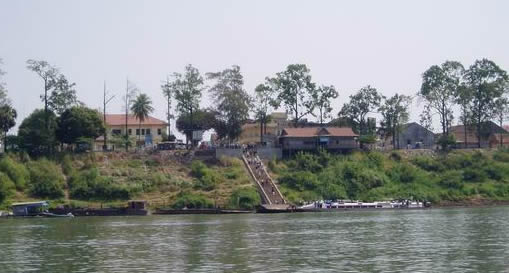
It is fun riding on the roof as the boat weaves among the rapids, and after 4 hours we reach the small town of Stung Treng. This is the end of the line. The Laos border is less than an hour further upstream by small boat. Beyond the border are the Khone Falls which are a barrier to all navigation regardless of the boat. Stung Treng was laid out by the French long ago. There is a square by the river with a strip of park running up the hill through the town. The park is dusty and strewn with rubbish. The market has just packed up before we arrive and there is a large pig foraging in the litter. There are 2 petrol stations on the river front each with petrol pumps replaced by oil drums. There are 2 hotels in town and 4 restaurants for foreigners, 3 of them with the same menu. Our hotel is along the river with a bougainvillea in the front yard and only one dead cockroach in the bathroom.
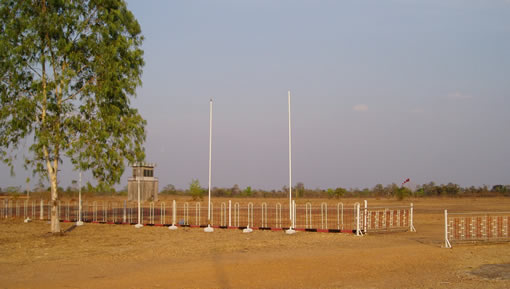
It is a small town. Within 5 minutes the manager of the outfit I am here to see knocks on the door. Petrina’s contact is only a few minutes behind. Next day we took a trip to see the airfield. The twice weekly flight from Phnom Penh was cancelled last year and it doesn’t look like they are expecting more any time soon. The terminal windows are broken, the control tower boarded up and a luggage cart stands forlorn in front of the terminal. The local kids are out here racing their mopeds up and down the runway. On the way back we pass the sign welcoming us to ‘Stung Treng Ville’, in French not Cambodian. The sign must be 50 years old.
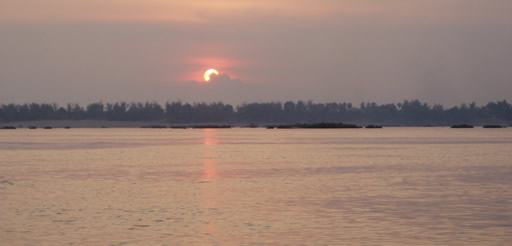
The GDP per capita of Cambodia is about 270USD per year. It has been growing at 2.4% per year for the last few years. Not bad, Gordon Brown would be happy with that. However that works out at less than 7 USD more per Cambodian per year, enough for a large Pizza and a coke from Dominos. Thailand next door managed 3.9% growth on a per capita GDP of 2000USD, so each Thai became almost 100USD richer. Cambodia is not going anywhere fast. In the evening we sit on the banks of the river watching the sun set, bright red into the river, with a contact of Petrina’s. ‘Is illegal logging a problem I ask?’ ‘No’ says Mr Nga, ‘The large trees are all gone’ Maybe the French were wasting their money building a town here in the first place, maybe the navigation beacons and the airport where white elephants destined to fall into misuse, and the locals have something better to spend their money on than pretty towns and transport for foreigners. But here it feels not so much like standing upon the shoulders of giants but living amongst their rubble.
|